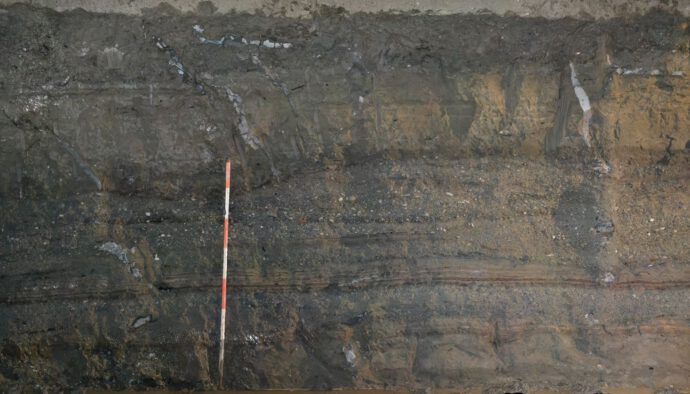
The year 2023 saw devastating earthquakes occurred in Turkey-Syria and Morocco, which caused thousands of victims and heavy destruction. This post is going to have an ironic tone, but we should not forget that our duty as paleoseismologists is to provide to policymakers and society the means to take the best informed decisions.
Usually, we do it by digging paleoseismic trenches and analyzing what they uncover. The 2023 trenchiest trench picture was posted on X (former Twitter) by Gülsen Uçarkuş, showing their trench cut into half by surface faulting following the Turkey-Syria earthquakes.

By loading the tweet, you agree to Twitter’s privacy policy.
Learn more
Trench with a view
Paleoseismology can bring you to wonderful places:
By loading the tweet, you agree to Twitter’s privacy policy.
Learn more
By loading the tweet, you agree to Twitter’s privacy policy.
Learn more
By loading the tweet, you agree to Twitter’s privacy policy.
Learn more
By loading the tweet, you agree to Twitter’s privacy policy.
Learn more
By loading the tweet, you agree to Twitter’s privacy policy.
Learn more
The devil is in detail
By simply looking at pictures, one can learn a ton from different styles and habits. And discover unusual expedients.
By loading the tweet, you agree to Twitter’s privacy policy.
Learn more
By loading the tweet, you agree to Twitter’s privacy policy.
Learn more
By loading the tweet, you agree to Twitter’s privacy policy.
Learn more
By loading the tweet, you agree to Twitter’s privacy policy.
Learn more
By loading the tweet, you agree to Twitter’s privacy policy.
Learn more
By loading the tweet, you agree to Twitter’s privacy policy.
Learn more
By loading the tweet, you agree to Twitter’s privacy policy.
Learn more
Shapes
Trenches come in all sorts of sizes and shapes:
By loading the tweet, you agree to Twitter’s privacy policy.
Learn more
By loading the tweet, you agree to Twitter’s privacy policy.
Learn more
Trench mindfulness
Trenching team mandatory equipment: foldable chair or any other object suitable for sitting on it and sketching the trench log.
By loading the tweet, you agree to Twitter’s privacy policy.
Learn more
By loading the tweet, you agree to Twitter’s privacy policy.
Learn more
By loading the tweet, you agree to Twitter’s privacy policy.
Learn more
Holy cow! (and other animals)
If only the students attending my lessons were interested in my slides like these animals are in trenches…
By loading the tweet, you agree to Twitter’s privacy policy.
Learn more
By loading the tweet, you agree to Twitter’s privacy policy.
Learn more
By loading the tweet, you agree to Twitter’s privacy policy.
Learn more
By loading the tweet, you agree to Twitter’s privacy policy.
Learn more
Not surprising that cows are supervising trench excavations.
Excavator operator shout-outs
They are often underappreciated but are a fundamental component for a good result!
By loading the tweet, you agree to Twitter’s privacy policy.
Learn more
By loading the tweet, you agree to Twitter’s privacy policy.
Learn more
By loading the tweet, you agree to Twitter’s privacy policy.
Learn more
Hand-dug trenches shout-outs
For the bravest only:
By loading the tweet, you agree to Twitter’s privacy policy.
Learn more
By loading the tweet, you agree to Twitter’s privacy policy.
Learn more
No caption
By loading the tweet, you agree to Twitter’s privacy policy.
Learn more
If you enjoyed this post, don’t buy me a coffee – I’m already caffeine-addicted. On the contrary, please go and make your workplace a better one: be kind to your peers, don’t put pressure on the students you’re supervising or don’t stress the hell out of your supervisor!